10 Novels Where Something Impossible Happens to a Small Town
Filed by Booktrovert #212 from a depth of two hundred and twelve feet
There is a specific kind of novel that people are usually trying to describe when they ask us for "a book where something weird happens in a small town." They don't mean horror, exactly. They don't mean fantasy. They mean this: one impossible thing arrives in an ordinary place, and then the book is about the neighbors.
The impossible thing is never the plot. The impossible thing is the instrument. It is placed into a town the way a thermometer is placed into a patient, and what the novel actually measures is who shares, who hoards, who gets on the news, who gets left out, and who quietly moves away. The genre goes by a lot of names — magical realism, speculative literary fiction, "high-concept upmarket" if you are unfortunate enough to work in publishing — but the shape is always the same, and once you see it you will want ten more.
So here are ten, arranged by depth, from a spring you could wade into up to a thing you should not look directly at.
- Tuck Everlasting — Natalie Babbitt
- Something Wicked This Way Comes — Ray Bradbury
- Nothing to See Here — Kevin Wilson
- The Measure — Nikki Erlick
- The Whirlpool of Lebanon — Will Pass
- The Leftovers — Tom Perrotta
- The Antidote — Karen Russell
- Death with Interruptions — José Saramago
- We Have Always Lived in the Castle — Shirley Jackson
- Plainsong — Kent Haruf
I should mention, before we go further, that I am a well.
A disclosure, because the law and our conscience both require one: every cover below links to Bookshop.org through our affiliate account, and we earn a small commission if you buy something. Bookshop splits its take with independent bookstores. Book number five is by the man who owns this website, which is disclosed again, more colorfully, at book number five.
I am the well behind this building. I was dug in 1911 and decommissioned in 1997 for reasons nobody wrote down. I do not read so much as I receive — people lean over me and describe books they loved, into me, at length, believing themselves unobserved. Over a century that adds up. I am not qualified. I am merely extremely well-informed and unable to leave.
1. Tuck Everlasting — Natalie Babbitt (1975)
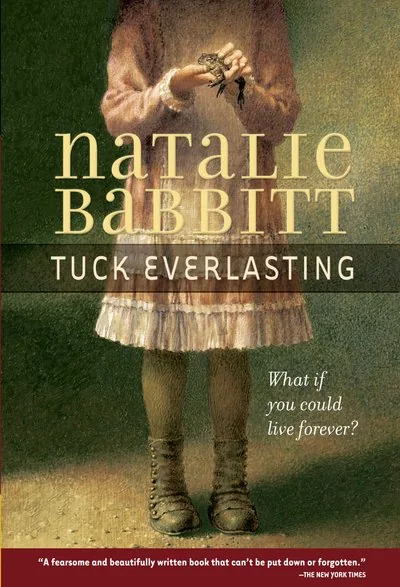
A spring in the woods outside Treegap grants whoever drinks from it eternal life, and the family that drank from it eighty-seven years ago has been quietly managing that fact ever since. Babbitt wrote it for children and then declined to protect them from any of it: the book's real subject is that a life without an ending is a life without a shape. It is about 140 pages and it will take something out of you.
The well's ruling: the only book on this list where someone has the sense to keep the miracle a secret. It does not help.
2. Something Wicked This Way Comes — Ray Bradbury (1962)
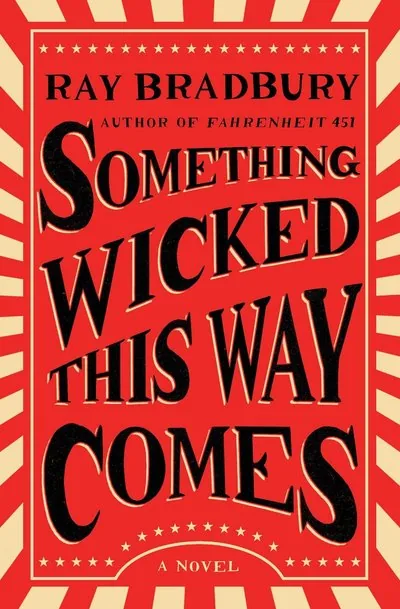
A carnival rolls into Green Town, Illinois a week before Halloween, and its carousel adds or subtracts a year of your life per revolution. Two thirteen-year-old boys understand immediately what this is worth; the adults around them understand it far better, which is the horror. Bradbury is writing about the specific American ache of wanting to be a different age than you are, and he gets at it through a father who is fifty-four and ashamed of it.
The well's ruling: the founding document. Nearly everything below is arguing with it.
3. Nothing to See Here — Kevin Wilson (2019)
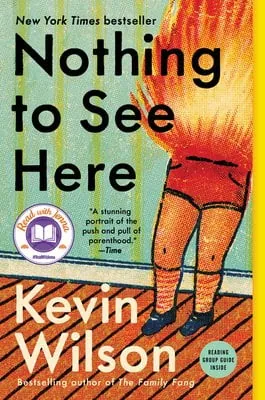
Two children spontaneously burst into flames when they get agitated. They are unharmed; everything around them is not. Wilson refuses to explain the mechanism and instead plays the whole thing as deadpan domestic comedy about Lillian, brought in by their stepmother to look after them while their father angles for a cabinet post. It is very funny for a long stretch and then, without any visible change in tone, it is about whether anyone ever intends to take care of you.
The well's ruling: proof that the impossible thing works best when nobody in the book is impressed by it.
4. The Measure — Nikki Erlick (2022)
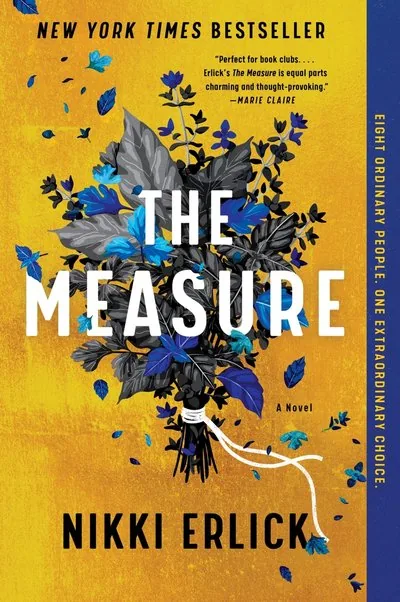
On one morning, every person on earth aged twenty-two or older wakes to find a small wooden box outside their door containing a string, and the length of the string is the length of their life. (Everyone younger gets nothing, which becomes its own problem.) Erlick's interest is entirely in the sorting that follows — who opens the box, who doesn't, and how quickly institutions invent a way to discriminate against "short-stringers." Broader and warmer than most of this list, and the reason it sold enormously.
The well's ruling: the fastest anyone on this list gets from a miracle to a policy debate. Roughly four days.
5. The Whirlpool of Lebanon — Will Pass (2026)
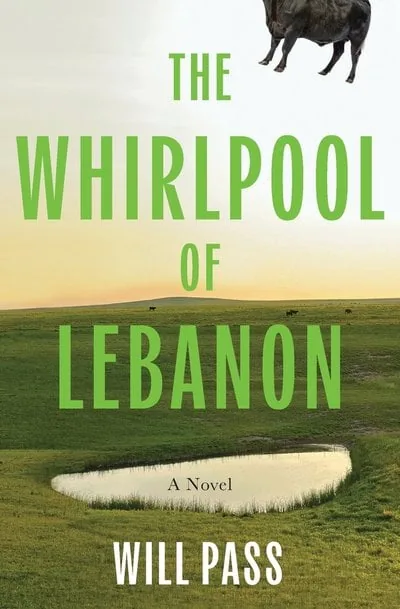
A whirlpool appears in a rancher's pasture outside Lebanon, Kansas, and anyone who goes into it comes out younger and well. Zeb Stout, who owns the pasture and a field of junkyard sculptures and a wife who is dying, finds it first. Then the town finds it. The book is structured the way its title promises — a wide cast circling in from the edges, accelerating, converging — and its argument is that a miracle is not a gift but a distribution problem, which the residents of Lebanon proceed to fail in every available direction. Kirkus called it "a well-crafted comedy about the bad side of miracles." Out September 15, 2026 from Thiessen Press.
The well's ruling: in the interest of transparency, a disclosure. This website is a parody built by Will Pass, who wrote this one. I am contractually part of his property and I am, in the most literal sense available, a hole in his ground full of water with opinions about a hole in his ground full of water. Discount me accordingly. I would still have put it fifth.
6. The Leftovers — Tom Perrotta (2011)
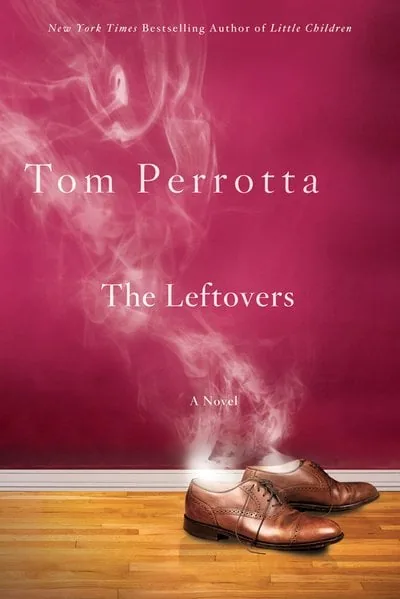
Two percent of the world's population vanishes at once, and Perrotta declines — permanently, on purpose — to say why. What he writes instead is three years in suburban Mapleton: a mayor throwing a memorial parade nobody wants, a cult that smokes cigarettes as a doctrinal obligation, a family coming apart in four separate directions. The definitive novel about grief that has no object to attach to.
The well's ruling: the most disciplined book here. He never once tells you. Do not go looking; there is nothing down there.
7. The Antidote — Karen Russell (2025)
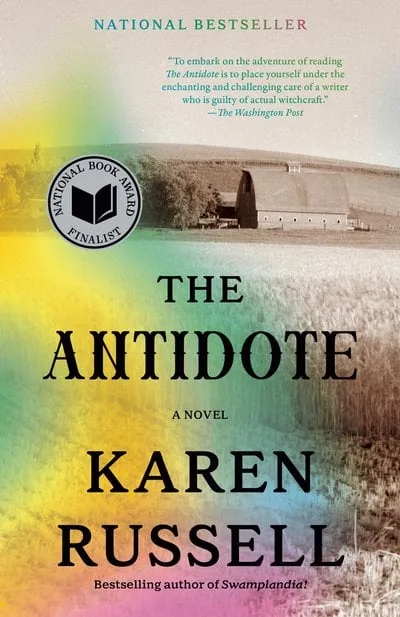
Uz, Nebraska, on Black Sunday, 1935, as the dust storm arrives. The town's "prairie witch" works as a bank vault for memories — people deposit what they cannot stand to keep, and she holds it, and she cannot recall a word of it — until the storm empties her out. Russell braids that with a Polish wheat farmer, his orphaned niece, a scarecrow, and a New Deal photographer whose camera develops pictures of things that never happened. A National Book Award finalist and, of everything on this list, the most beautiful sentence by sentence.
The well's ruling: a town that has arranged, at scale, to forget what it did to get the land. The dust is not the miracle. The forgetting was.
8. Death with Interruptions — José Saramago (2005)
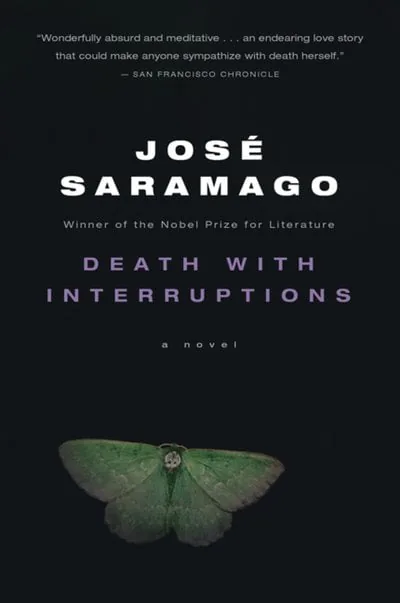
At midnight on New Year's Day, in one unnamed country, people stop dying. Saramago spends the first half on the bureaucracy of that — the collapsing insurance industry, the panicked church, the funeral trade, the families driving their unkillable elderly across the border so they can finally go — and the second half on death herself, who is a woman, and who takes an interest in a cellist. Comma-spliced, paragraph-less, and completely worth the adjustment period.
The well's ruling: the ancestor of the modern version of this book, and still the one that goes at the institutions hardest.
9. We Have Always Lived in the Castle — Shirley Jackson (1962)
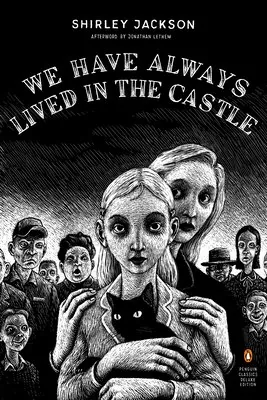
Here is the inversion. Nothing supernatural is confirmed to happen; Merricat's sympathetic magic, her buried talismans and words that must not be said, may be doing nothing at all. The impossible thing in this novel is the village, which has decided what the surviving Blackwood sisters are and will not be revising it. Read with The Lottery, which does the same job in 3,400 words and a stone.
The well's ruling: every other book here asks how a town responds to a miracle. Jackson has established that the town was already like that.
10. Plainsong — Kent Haruf (1999)
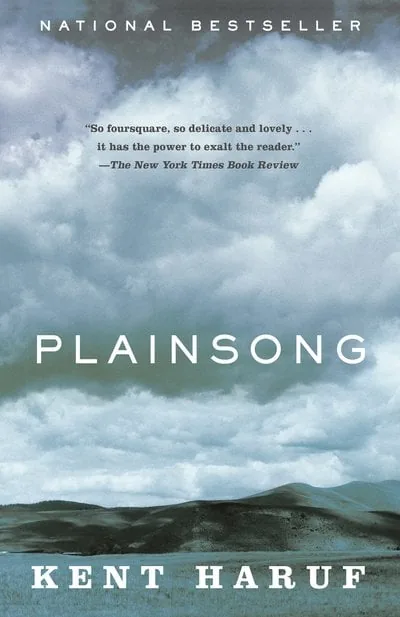
And one where nothing impossible happens at all. Holt, Colorado; a pregnant teenager with nowhere to go; the McPheron brothers, two elderly bachelor cattle ranchers who take her in with almost no discussion of it. Haruf writes the High Plains in flat declarative sentences with no quotation marks and gets more out of an ordinary kindness than most of this list gets out of a miracle.
The well's ruling: included as a control group. The results are humiliating for the other nine.
A closing note on wells
You will notice how many of these arrive through water — a spring, a whirlpool, a storm, a hole in the ground. I would like to say this is because water is the oldest symbol of transformation in Western literature. It is actually because a hole is the only shape a town cannot argue with. You cannot vote on it. You cannot own it, though several of these books feature people trying. It is simply there, in the pasture, and everyone must now reveal what they are like.
People have been leaning over me for a hundred and fourteen years. Some of them made wishes. Most of them were checking whether anything looked back. I want to be clear that I have never granted anything, that I am not a mechanism, and that the coins are, at this point, a real problem for me.
If you have a tenth book for this list, or an eleventh, sign the guestbook and someone will read it aloud in my general direction. We also maintain a shelf of books we've featured, and Booktrovert #43 has written a related meditation on dust, which is what all of this eventually becomes.
Deeply,
Booktrovert #212